

 Germany
 United Kingdom
  Spain
Spain 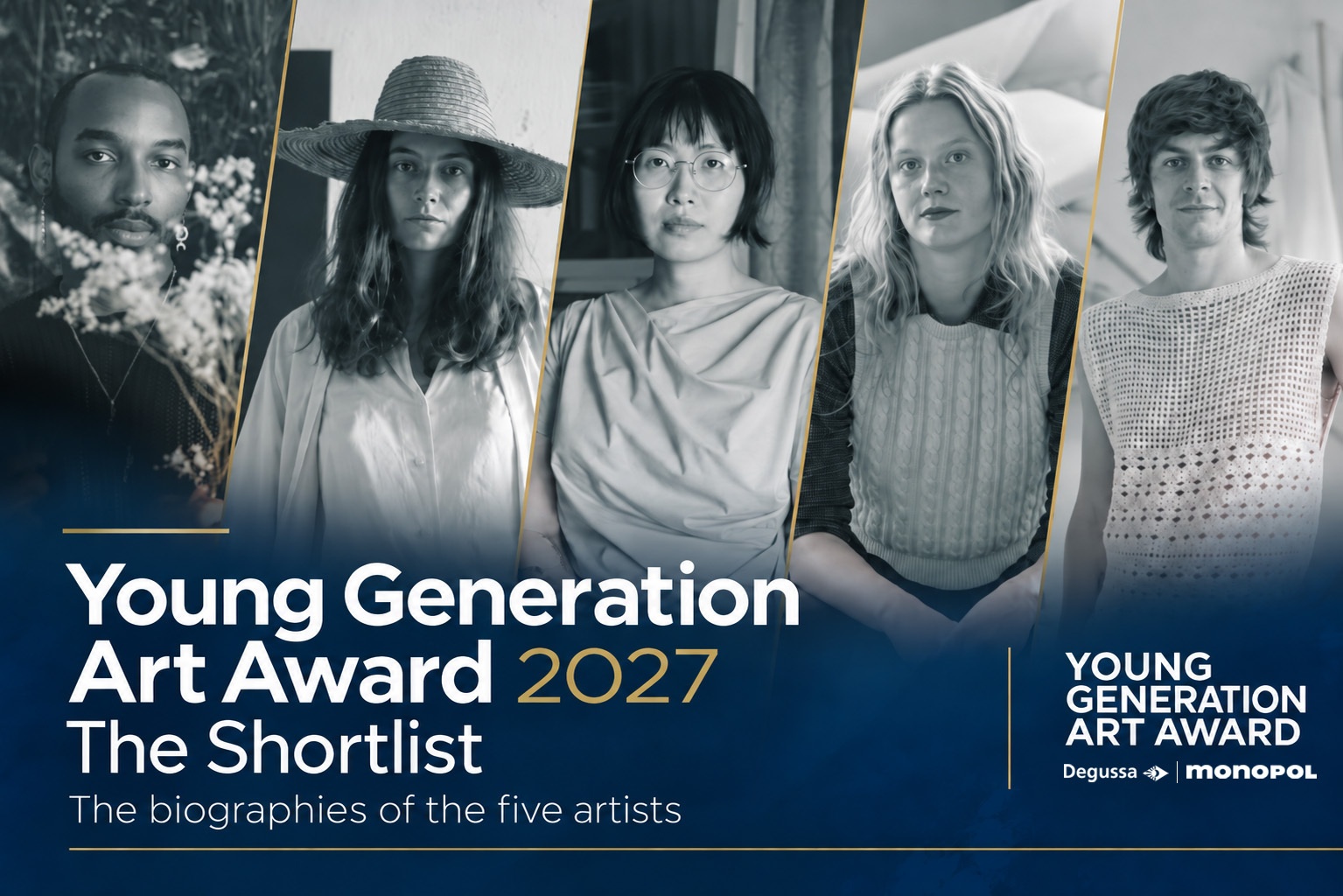
Die Shortlist 2027
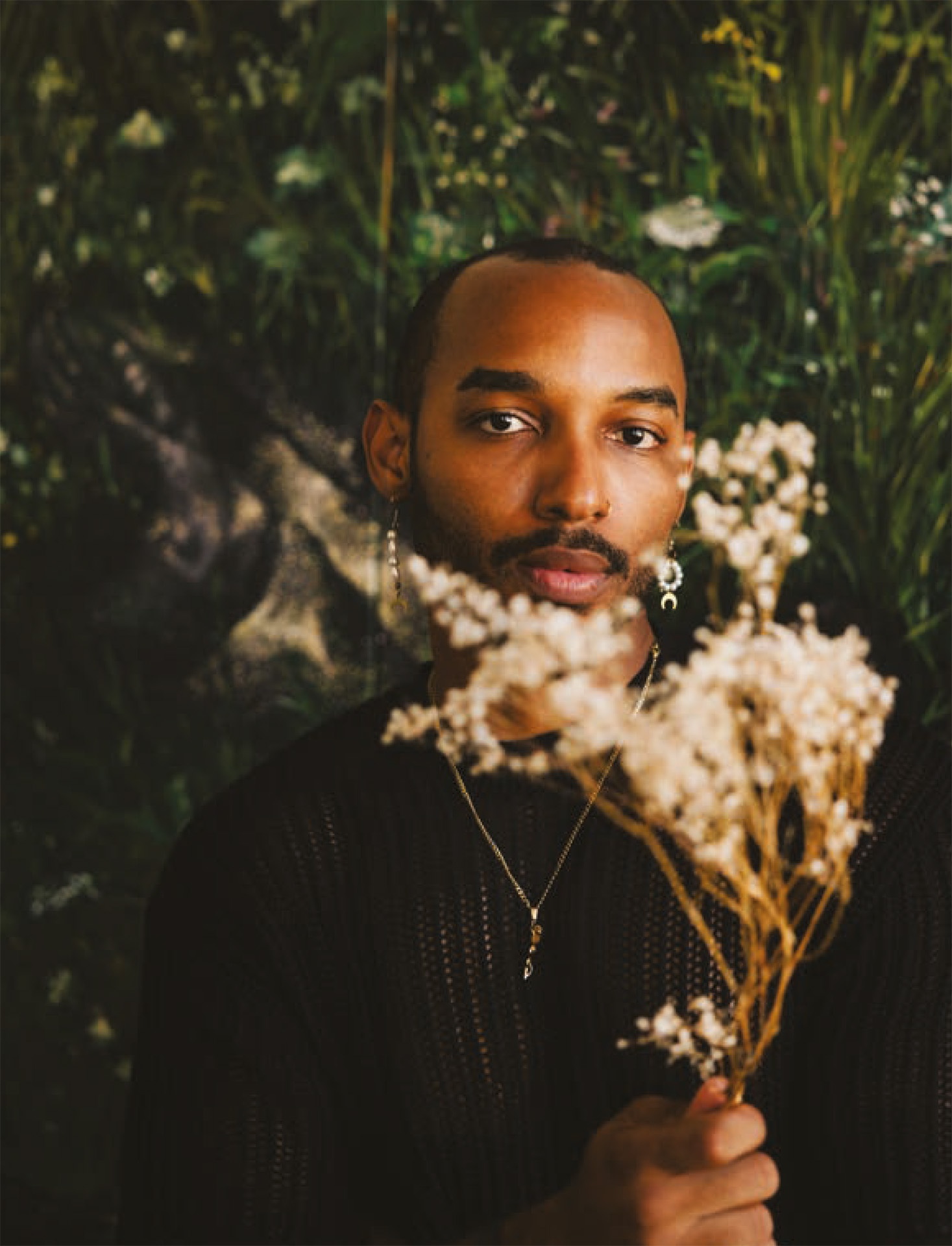
Hope Bartley
Hope Bartley, born in Kingston in 1993, studied in Jamaica at the Caribbean School of Architecture and at the Bauhaus Dessau, where he earned his master’s degree in architecture in 2018. In his artistic practice, he examines the relationship between humans and nature, which he explores through installations, video, and painting. In his works, nature is not an external place one can visit, but an integral part of the human condition.
“Biophilia”—the innate connection to the natural environment—is of great significance in the Caribbean and Latin American regions. The artist notes that it is “not simply admiration for nature, but an essential, almost instinctive bond between human life and the natural world. I view this relationship from both a poetic and a scientific perspective.”
Bartley’s works often depict human figures in states of transformation. They blend into their backgrounds, emerging like friendly spirits from their natural surroundings and appearing to be symbiotically connected to them. The separation between nature and humans is dissolved in these motifs, raising the question of whether this separation is a construct that could be undone. "Ultimately, my work seeks to open a space of reflection in which boundaries dissolve: between self and environment, perception and truth, fragmentation and wholeness. In this convergence, I aim to propose a quiet yet persistent possibility, that through deeper awareness and embodied experience, new forms of understanding and coexistence may emerge.”
Joanna Chia-yu Lin
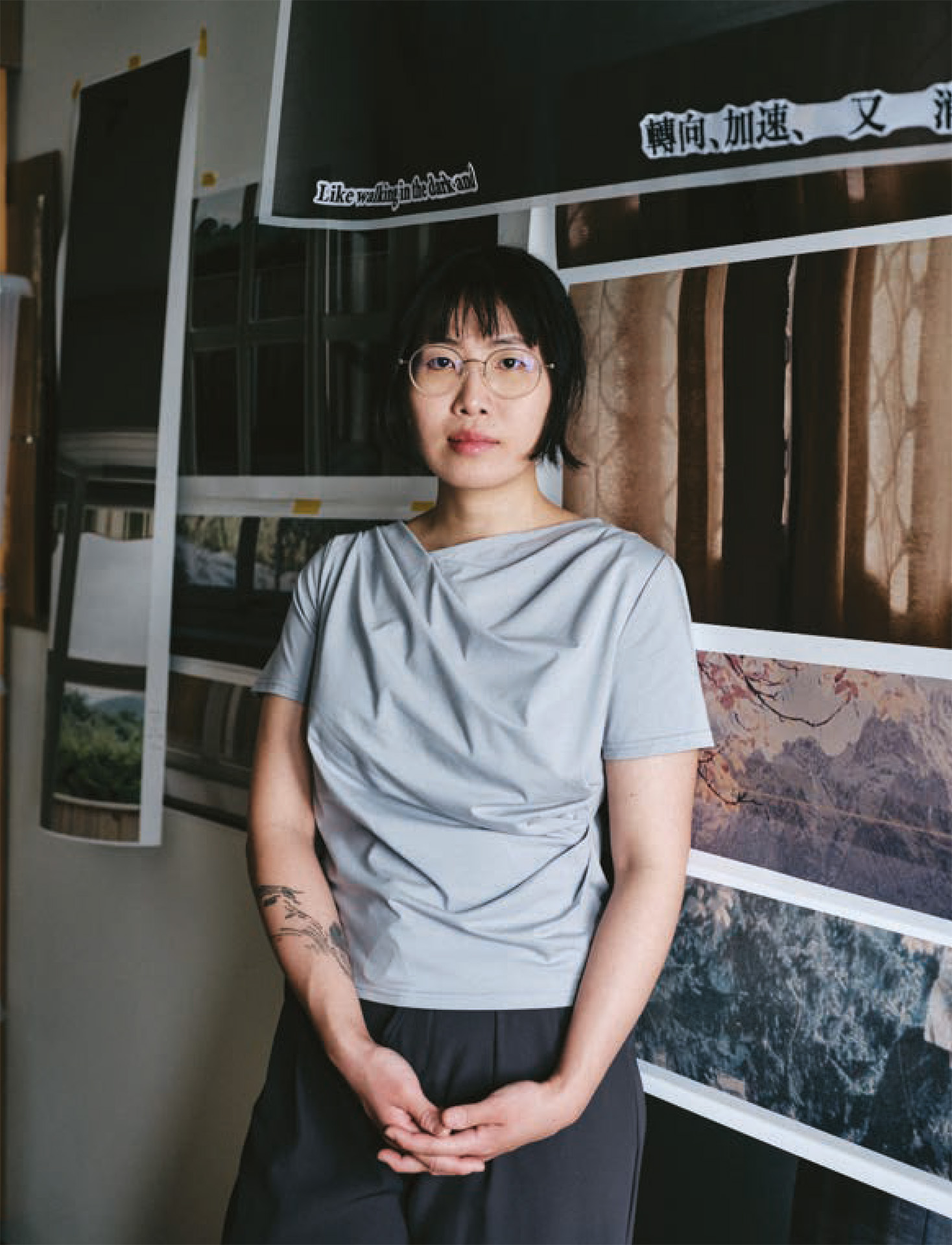
Joanna Chia-yu Lin was born in Taiwan in 1995. She studied art in Taipei before enrolling in 2020 at the Oslo National Academy of Fine Arts in Norway, where she still lives today. She creates large-scale textile installations that serve as backdrops for her original or found photographs, which she transfers onto synthetic materials using various techniques. Her themes often include memory, family, and the effects of migration on personal relationships.
“For the past seven years, I have lived in Norway while making short returns to Taiwan. This movement shapes how I experience distance as something fractured, a condition for remembering and forgetting. With each return, I notice new traces in family houses: objects moved, dust gathering. Documenting these spaces became a way to hold these moments before they slip further,” she says.
Her series “8800 km, 14 Postcards (Until the Day She Arrives)” from 2025 is based on postcards that she and her mother wrote to each other—mutual projections onto each other’s distant lives. In her 2025 installation “Family Album,” she printed photos of her mother’s and grandmother’s vanity tables, as well as her own desk, onto sheets of film. These are draped throughout the room like curtains, creating an intimate space where three generations of women—who are currently unable to interact in person—may come together.
“The work explores the balance between independence, duty, and the freedom to choose, reflecting on how family experiences shape identity and women’s roles within cycles of love, care, and expectation,” she says.
Pierre-Yves Delannoy
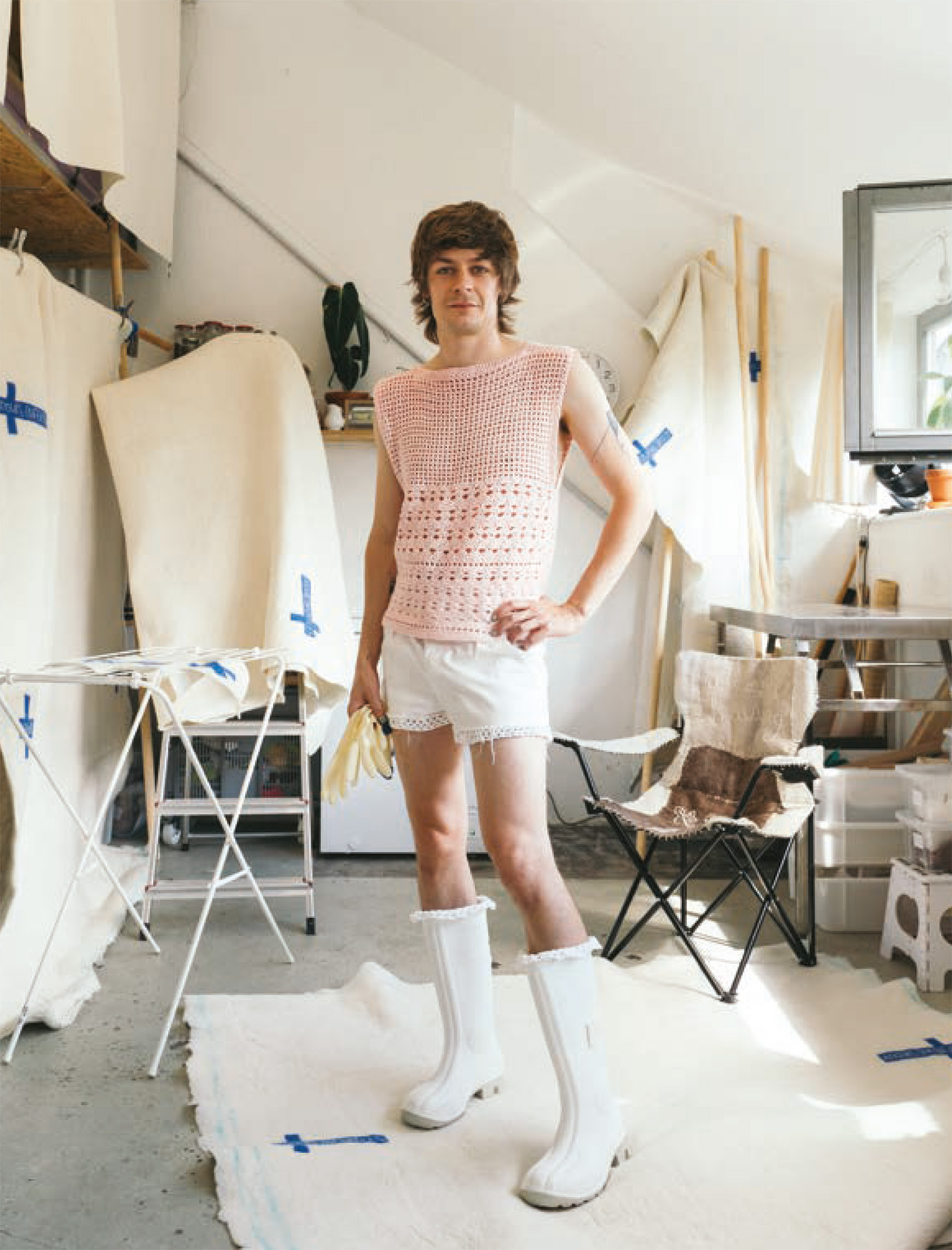
Pierre-Yves Delannoy, born in 1995 in Châlons-sur-Marne, France, studied art and architecture in Paris, Versailles, and Munich. In 2025, he graduated with a master’s diploma under Julian Rosefeldt at the Academy of Fine Arts in Munich.
In his works, Delannoy employs artisanal techniques such as felting, live performance, and spatial installations. By using materials such as wool and textiles—often associated with femininity and dismissed as relatively valueless—he challenges these assumptions.
Delannoy treats memories from his childhood as living elements in his motifs. He not only conjures up the images but also gives them a tangible presence. When he depicts the endless fields and silos of rural France from inside a car, as in the felted wall piece “Fières Pouilleux” (Proud Lice), he simultaneously draws attention to the wasteland as a secret cruising spot. In “Pendant Que Les Champs Brûlent” (While the Fields Burn), he mourns a pre-industrial nature that has long since been destroyed. While he experiences the loss as a personal wound, it is one still shadowed by the hope for a utopia: “to the hope that, if I were to water this land with my tears, a future might sprout there. I dream of a land where diversity is cultivated once again. Where the relationships between people are as rich and vibrant as the earth beneath them.”
Joana Loewis
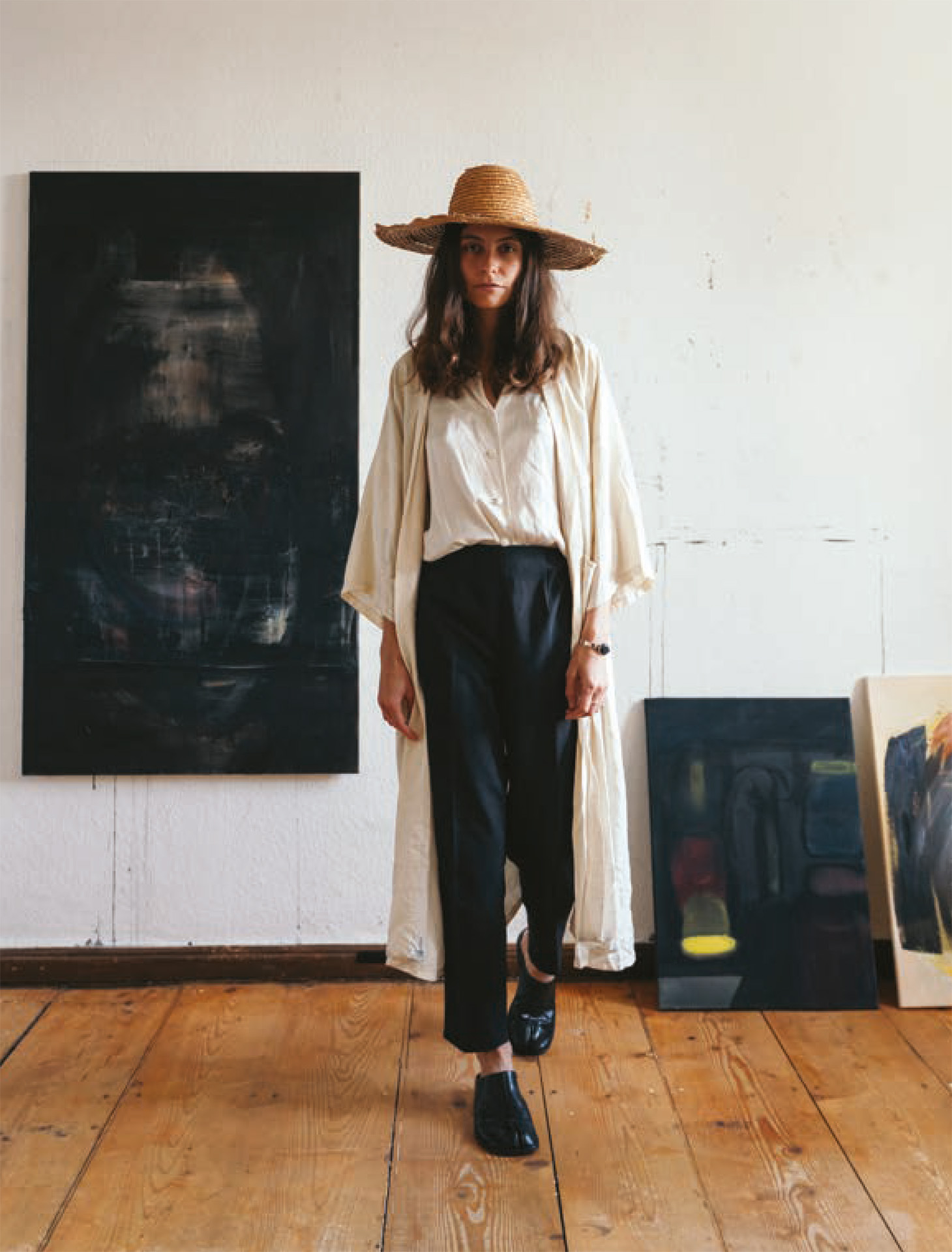
Joana Loewis, born in 1996, studied at the Academy of Fine Arts in Munich under Jorinde Voigt, Pola Sieverding, and Gregor Hildebrandt, with whom she completed her studies with in 2026, earning a diploma as a master’s student.
In her work, Loewis treats abstract painting as a field with its own laws—laws she probes ever more deeply through her practice. These principles “cannot be fully understood by the intellect,” she says. “I see this field as a collective one that embodies a universal, timeless knowledge.”
Armed with this knowledge—which, throughout the centuries of painting history, must continually be reexamined by contemporary artists—Loewis takes full creative liberty in the use of form and colour in her paintings. In doing so, she arranges her pictorial elements by holding free and deliberately controlled painterly gestures in a careful balance. Through her decisive use of light and dark, she gives her paintings depth and multiple layers that structure the viewer’s gaze on the canvas, whose formats range from small to large. “Through my work, I want to create connections,” says Joana Loewis, “that move people and function for their own sake.”
Louisa Pieper
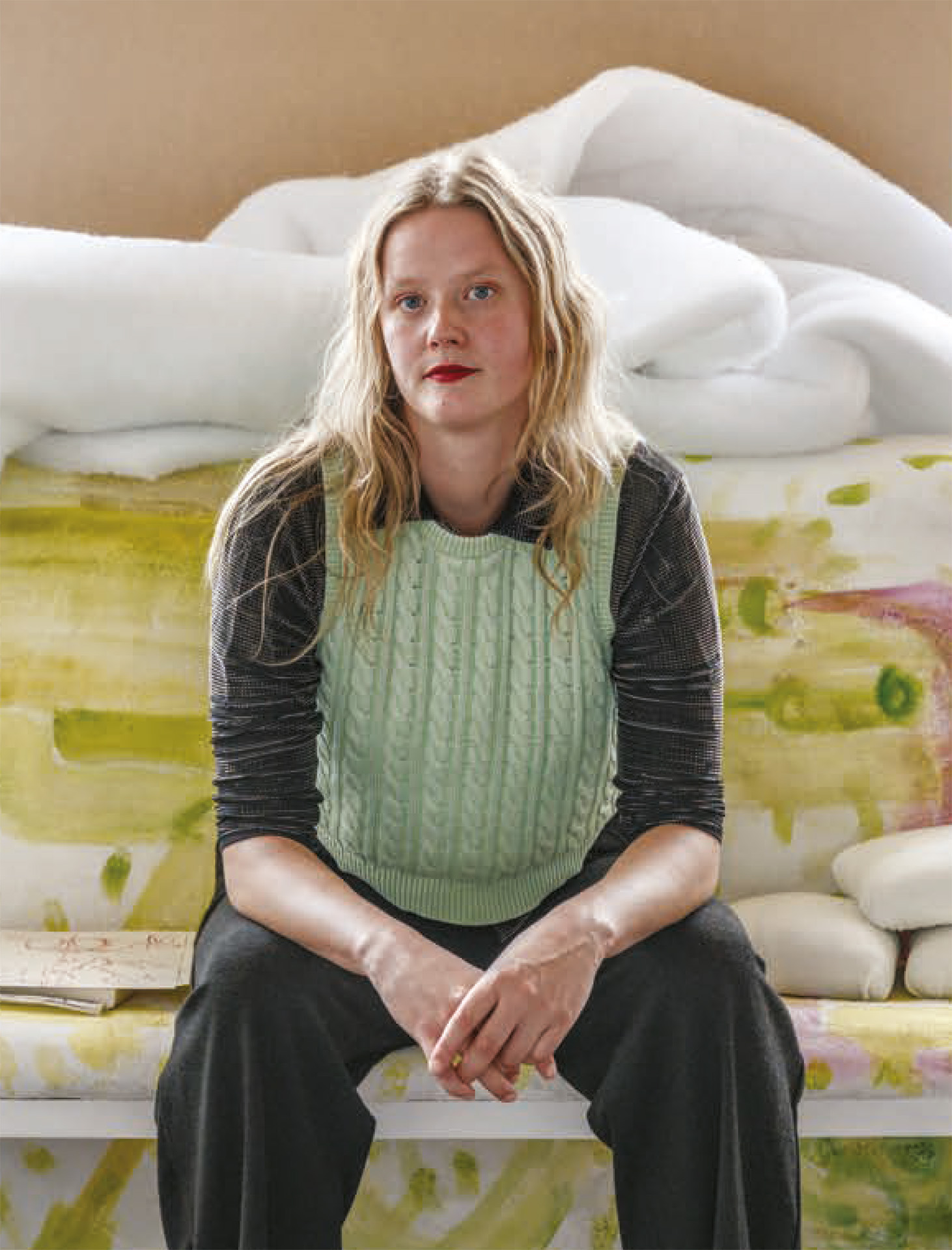
born in Germany in 1997, studied painting in Leipzig and Halle and graduated in the spring of 2026. She often uses unusual materials in her work: she paints on velour fabric stretched over thick foam, so that her paintings resemble oversized pillows. Her colours are vibrant, and her motifs are often comic-like and cheerful. But within these elements lies a serious concern: Pieper was born with a hearing impairment. “In my artistic work, I explore my own hearing loss, my cyborg body, and disability within the art world. A cyborg is a living being that has been technically augmented or enhanced. I am augmented. I have difficulty hearing, which is why I wear hearing aids. My body is a cyborg body and interacts with others in an unobtrusive way,” she says.
Pieper’s body reacts differently to certain objects and spaces. Large, empty spaces full of reverberation—the classic white cube—are acoustically taxing for her. Induction cooktops, humidity, or even certain headphones can interfere with the functioning of her hearing aids. She makes these “Hearing Antagonists” the subject of her art. “In my painting, I deal with everything that frightens me, with everything that bothers me. I process my antagonists in my paintings. Using foam and plush fabric, various textures, and polychromatic colours, I confront my ‘Hearing Antagonists’ and disempower them,” she says. Accessibility, Pieper argues, deserves far more attention in the art world.