 Germany
 Switzerland
 Spain
 United Kingdom
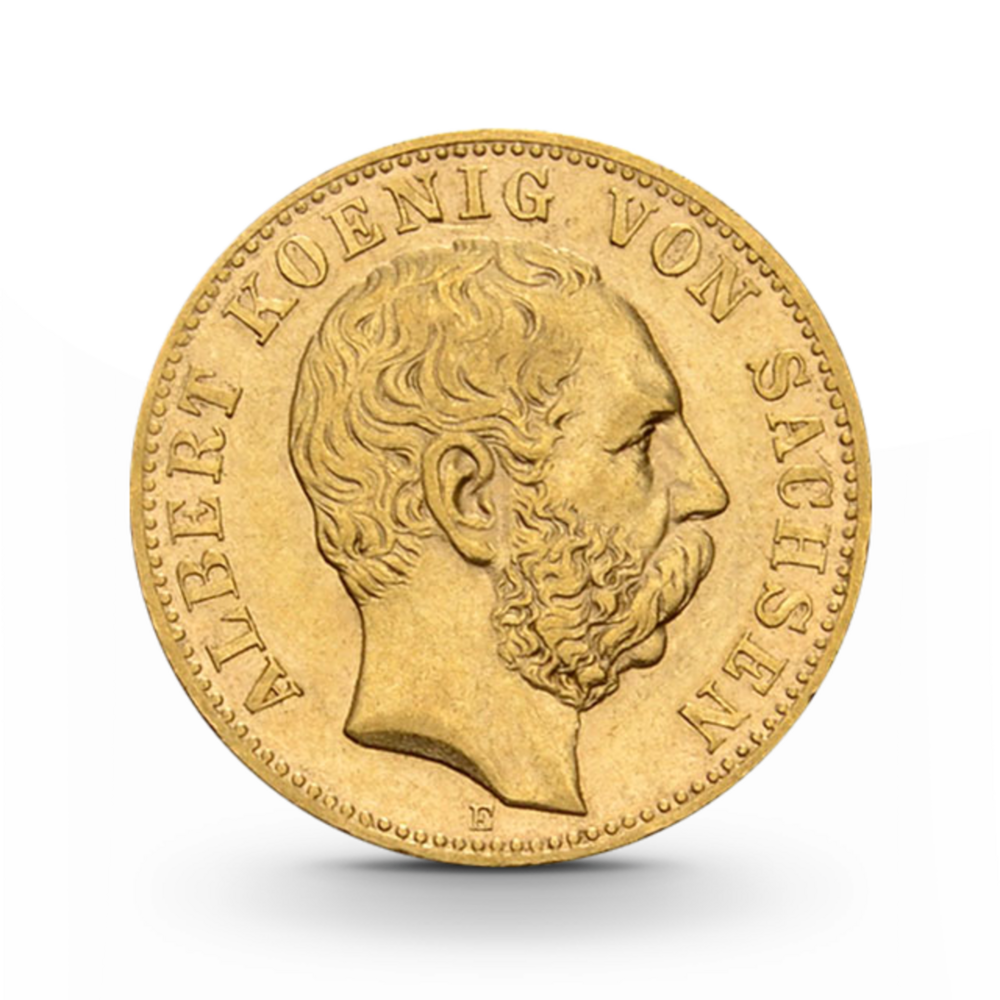
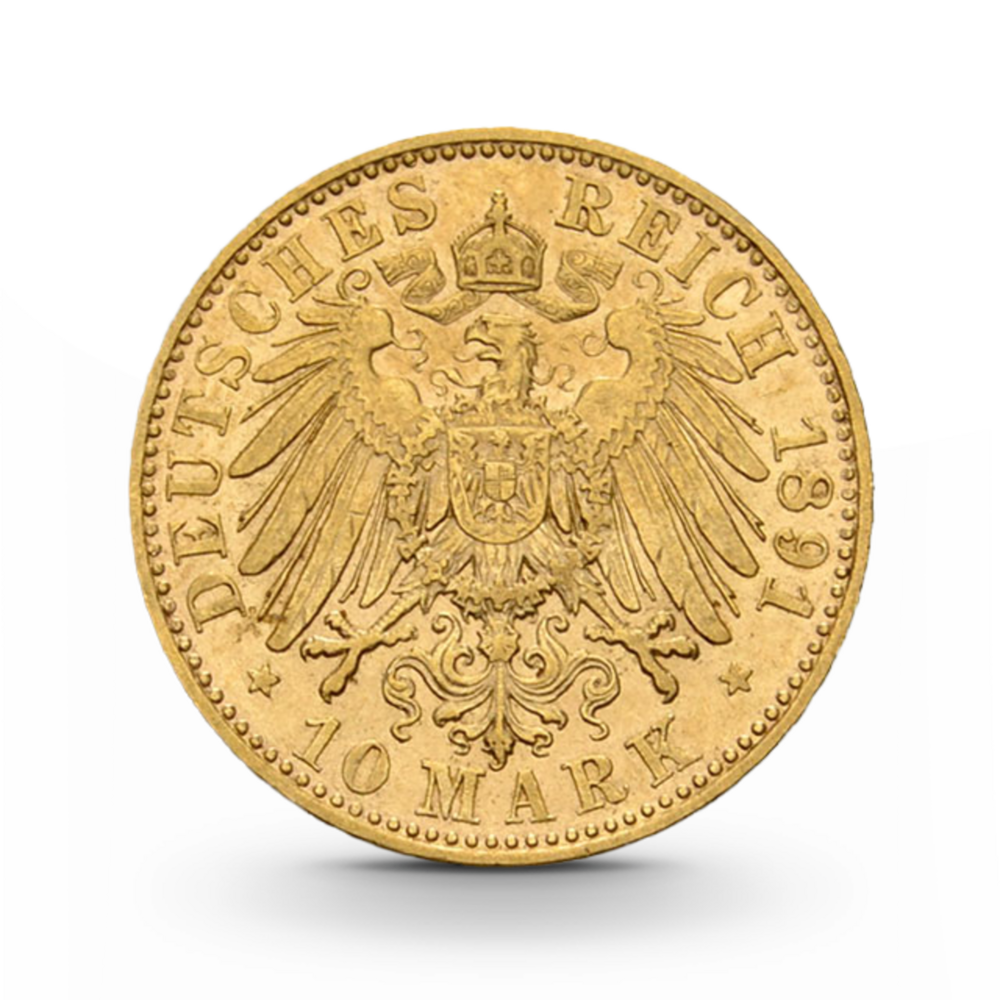

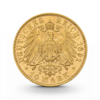
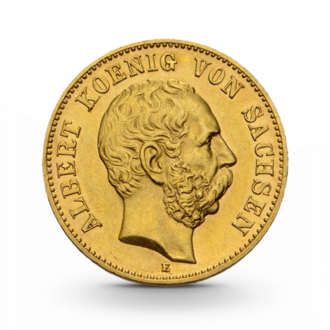
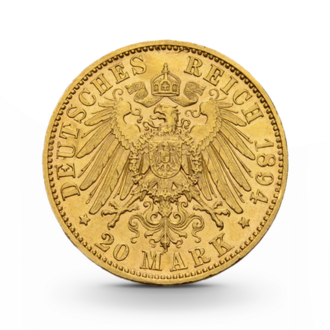
Saxony 10 Mark Albert German Empire Gold
- Details
- Product description
| Thickness | 0.90 mm |
|---|---|
| Diameter | 19.50 mm |
| Net weight (g) | 3.58 |
| Purity | 900.00 |
| Metal Type | Gold |
| Mint Year | 1874-1902 |
| Coin Series | German Empire |
| Type | Coin |
The German Empire was founded on January 18, 1871, with the proclamation of the Prussian King Wilhelm I as German Emperor in Versailles. As part of the empire's foundation, a currency reform was carried out. The taler was replaced by the mark as a means of payment. Each ruler of the 25 constituent states had the right to mint their own gold mark.
Condition: ss-vz, J. 261; J. 263
Minting period: 1874-1902
Obverse: ALBERT KOENIG VON SACHSEN ∙ Head facing right | E
Reverse: DEUTSCHES REICH [Minting year] | Reichsadler * 10 MARK *
Edge: Arabesques Design and die by Max Barduleck, Dresden
The Kingdom of Saxony existed from 1806 to 1918 and originated from the Electorate of Saxony. Its capital was Dresden. King Johann reigned from 1854 to 1873. Under his rule, the kingdom became a member of the German Empire in 1871. When King Johann died in 1873, his son King Albert took over the reign. He ruled as sovereign of the city of Leipzig for about 29 years.
Our images are representative of the respective coin type. Years/minting locations or design variations are delivered depending on availability. There is no entitlement to the delivery of a specific depicted year.