
 Germany
 Switzerland
 Spain
 United Kingdom
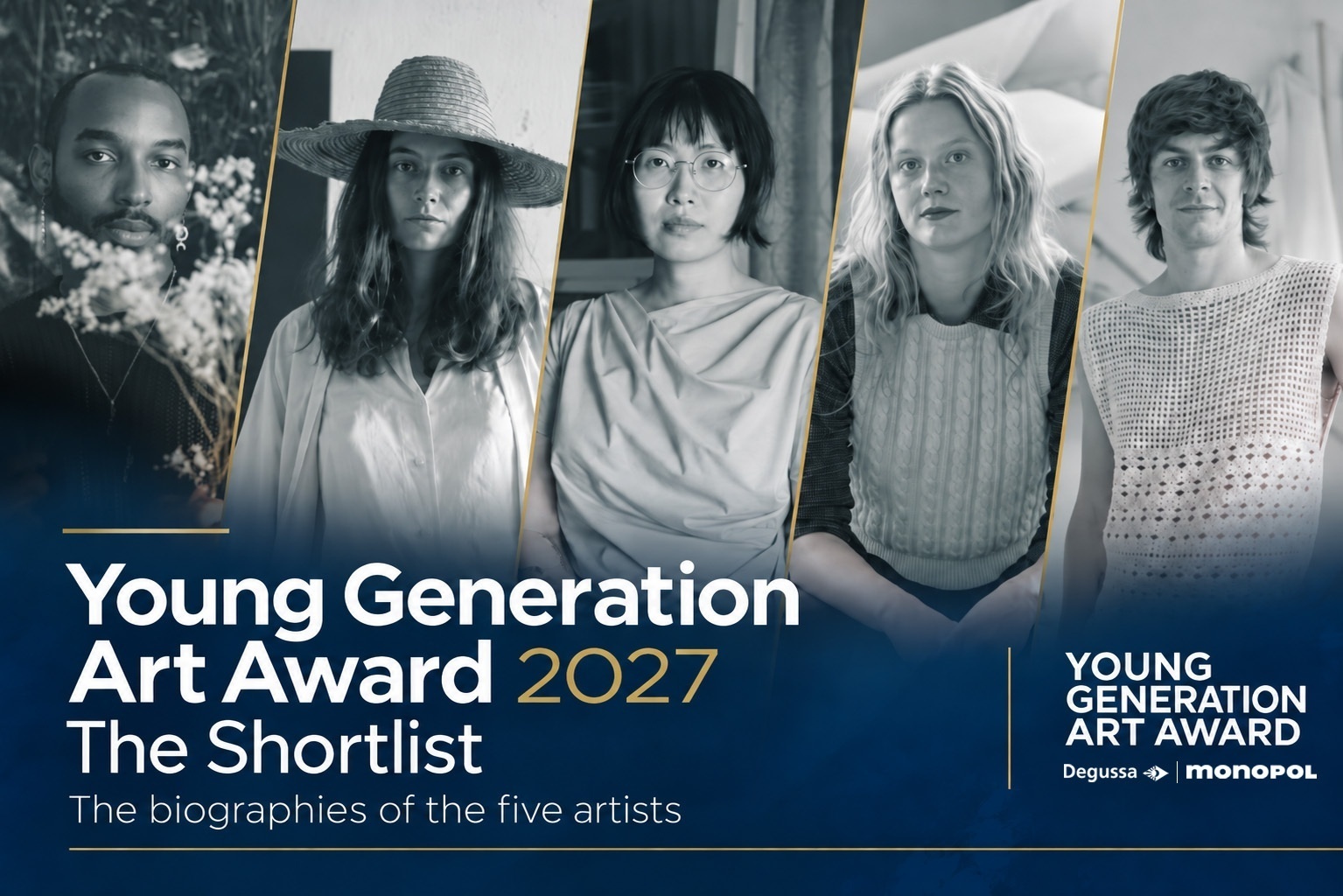
The shortlist 2027
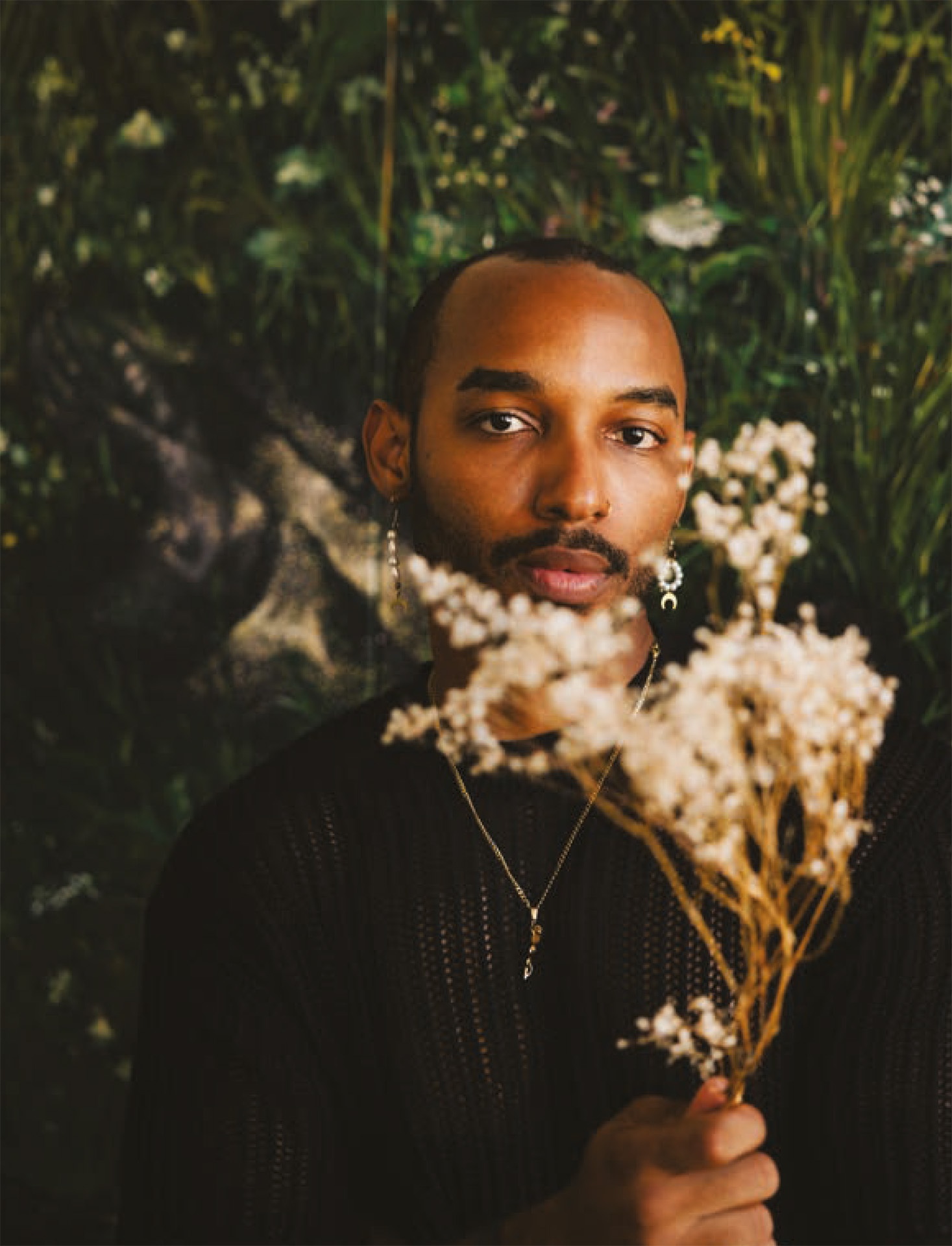
Hope Bartley
Hope Bartley, born in 1993 in Kingston, studied at the Caribbean School of Architecture in Jamaica and at the Bauhaus Dessau, where he obtained his master’s degree in architecture in 2018. In his artistic practice, he explores the relationship between humans and nature, which he approaches through installations, video and painting. In his work, nature is not an external place to visit, but an integral part of human existence.
“Biophilia” – the innate connection to the natural environment – has great significance in the Caribbean and Latin America. The artist emphasises that it is “not simply about admiring nature, but about a fundamental, almost instinctive connection between human life and the natural world. I look at this relationship from both a poetic and a scientific perspective.”
Bartley’s work often shows human figures in a state of transformation. They merge with their background, emerge like friendly spirits from their natural surroundings and seem symbiotically connected to them. In these motifs, the separation between nature and humans is dissolved, raising the question of whether this separation is merely a construct that could disappear again.
“Ultimately, with my work I want to open up a space for reflection in which boundaries blur: between self and environment, perception and truth, fragmentation and wholeness. In this merging, I want to show a quiet but persistent possibility: that new forms of understanding and coexistence can emerge through deeper awareness and physically felt experience.”
Joanna Chia-yu Lin
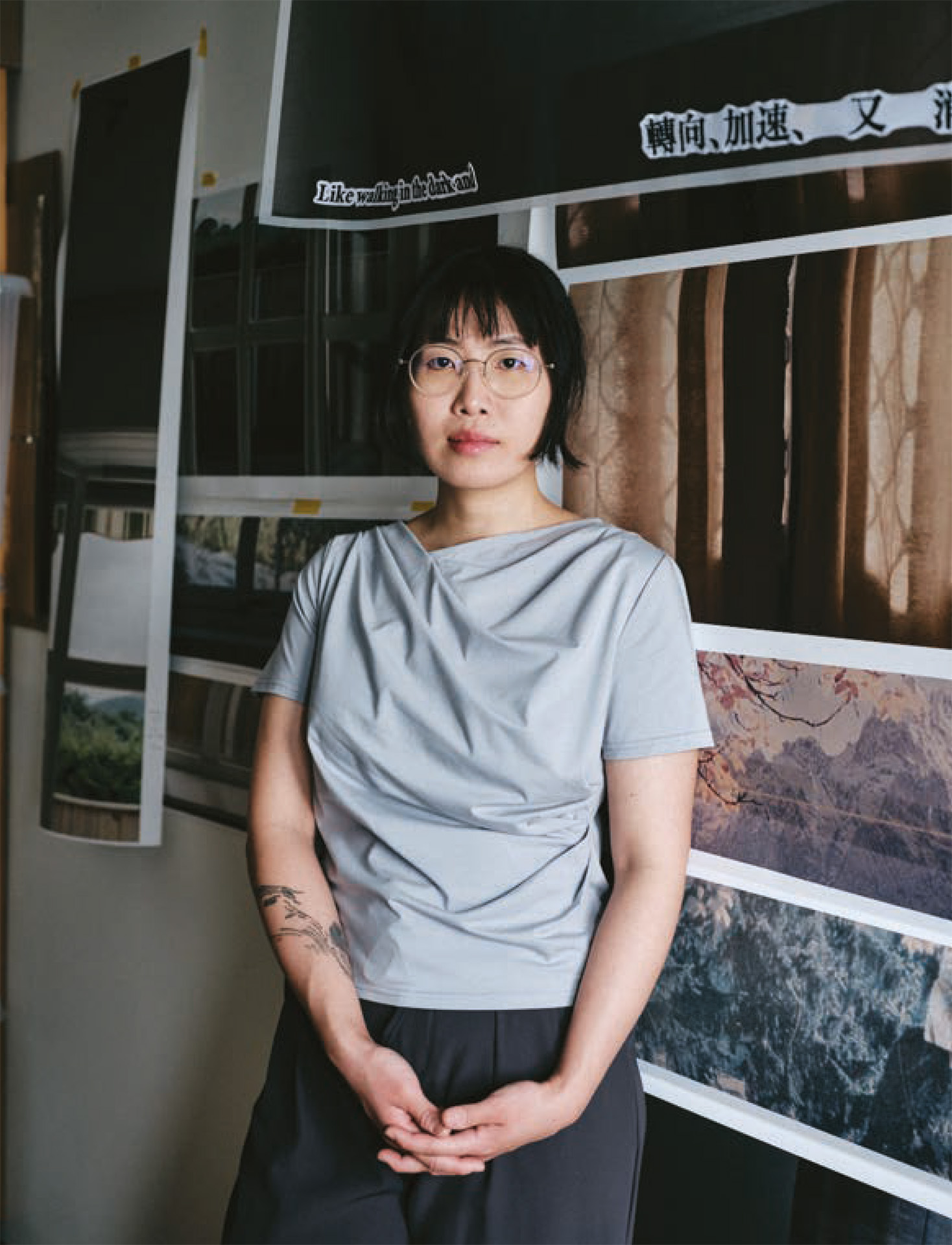
Joanna Chia-yu Lin was born in Taiwan in 1995. She studied art in Taipei before enrolling at the Oslo National Academy of Fine Arts in Norway in 2020, where she still lives. She creates large-scale textile installations that serve as a backdrop for her own or found photographs, which she transfers onto synthetic materials using various techniques. Recurring themes in her work are memory, family and the effects of migration on personal relationships.
“I have been living in Norway for seven years and keep returning to Taiwan for short periods. This movement shapes how I perceive distance: as something fragmented, as a precondition for remembering and forgetting. Each time I return, I discover new traces in my family’s homes: objects have been moved, dust has gathered. Documenting these spaces became a way for me to capture those moments before they fade further,” she says.
Her series “8800 km, 14 Postcards (Until the Day She Arrives)” from 2025 is based on postcards that she and her mother wrote to each other – mutual projections onto each other’s distant lives. For her installation “Family Album” from 2025, she printed photographs of her mother’s and grandmother’s dressing tables and of her own desk onto lengths of film. These hang like curtains in the room and form an intimate space where three generations of women – who cannot meet in person at present – come together.
“The work explores the balance between independence, duty and the freedom to decide for oneself, and reflects on how family experiences shape identity and the role of women within the cycles of love, care and expectations,” she says.
Pierre-Yves Delannoy
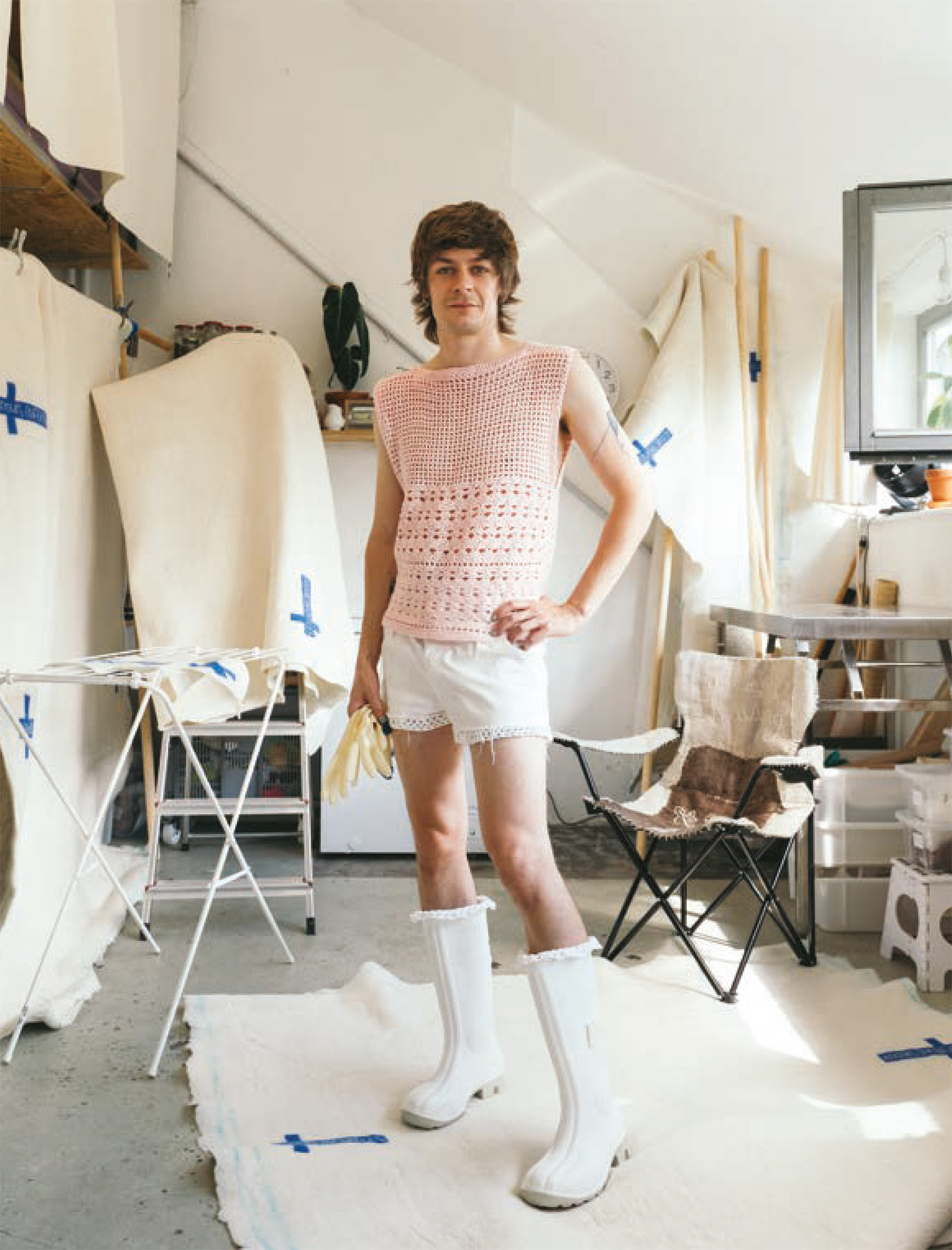
Born in 1995 in Châlons-sur-Marne, France, he studied art and architecture in Paris, Versailles and Munich. In 2025, he completed his studies at the Akademie der Bildenden Künste München as a master student of Julian Rosefeldt.
In his work, Delannoy uses craft techniques such as felting, live performances and spatial installations. By using materials such as wool and textiles – which are often associated with femininity and regarded as relatively low in value – he calls these attributions into question.
Delannoy treats memories from his childhood as living elements of his motifs. He not only recalls the images, but also gives them a tangible presence. When, for example, in the felted wall piece “Fières Pouilleux” (Proud Lice) he shows the endless fields and silos of the French countryside as seen from a car, he simultaneously draws attention to wasteland as a secret cruising spot. In “Pendant Que Les Champs Brûlent” (While the Fields Burn), he mourns a pre-industrial nature that was destroyed long ago. He experiences this loss as a personal wound, which is nevertheless accompanied by the hope of a utopia: “the hope that, if I were to water this land with my tears, a future could sprout there. I dream of a land in which diversity is cultivated again. In which the relationships between people are as rich and vibrant as the earth beneath them.”
Joana Loewis
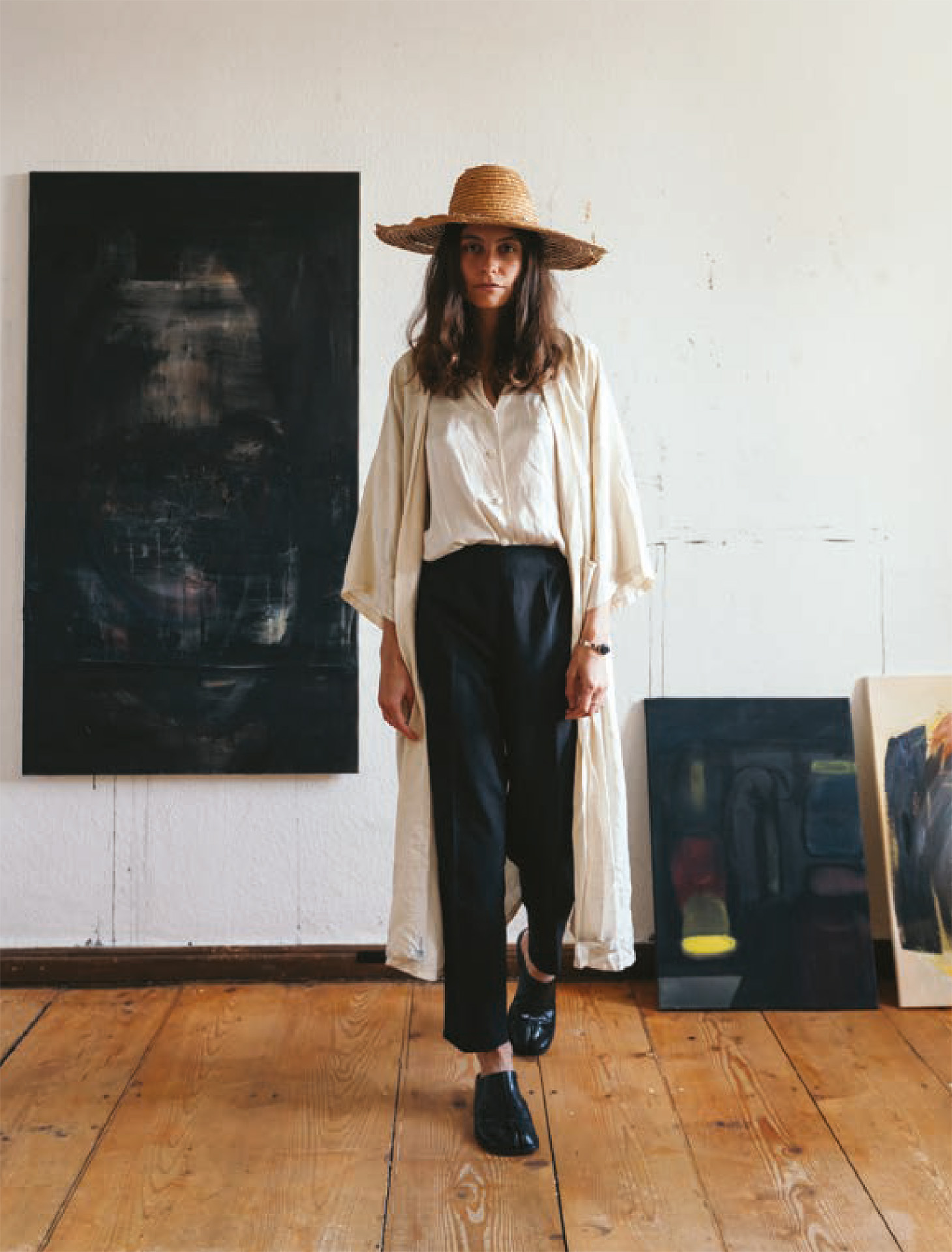
Joana Loewis, born in 1996, studied at the Akademie der Bildenden Künste München under Jorinde Voigt, Pola Sieverding and Gregor Hildebrandt, with whom she completed her studies as a master student with a diploma in 2026.
In her work, Loewis sees abstract painting as a field with its own laws, which she explores ever more deeply in her artistic practice. These principles “cannot be fully grasped by the intellect”, she says. “I see this field as a collective field that embodies universal, timeless knowledge.”
Armed with this knowledge – which must be explored again and again by contemporary artists over the course of the centuries-long history of painting – Loewis takes great creative freedom with form and colour in her paintings. She arranges her pictorial elements by carefully balancing free and deliberately controlled painterly gestures. Through the targeted use of light and dark, she gives her paintings depth and multiple layers that guide the viewer’s gaze across the canvas. Her formats range from small to large. “With my work, I want to create connections,” says Joana Loewis, “that touch people and function on their own.”
Louisa Pieper
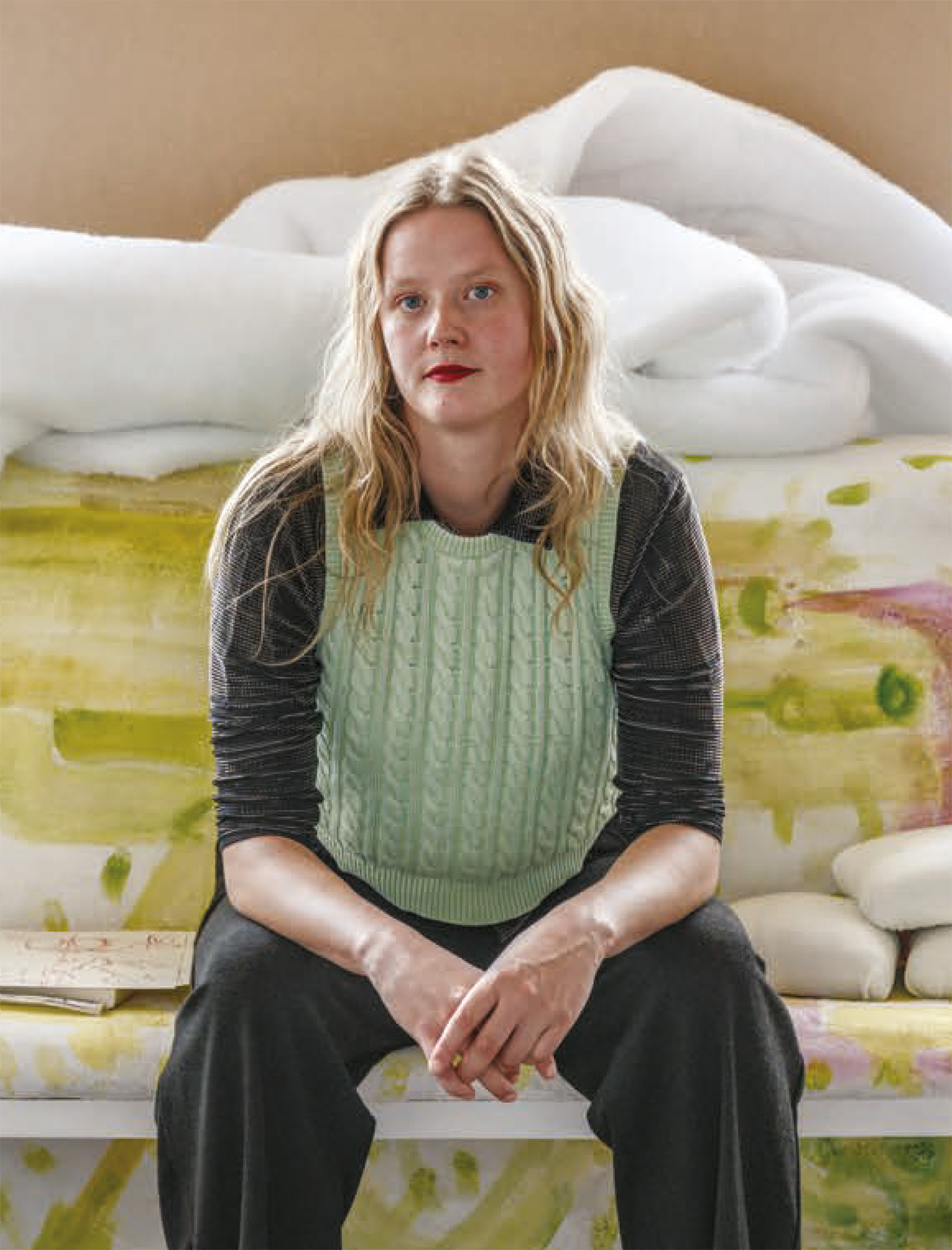
Born in Germany in 1997, she studied painting in Leipzig and Halle and completed her studies in spring 2026. For her work, she often uses unusual materials: she paints on velour stretched over thick foam rubber, so that her paintings resemble giant cushions. Her colours are bright, her motifs often comic-like and cheerful. But behind them lies a serious message: Pieper was born with a hearing impairment.
“In my artistic work, I deal with my own hearing loss, my cyborg body and with disability within the art world. A cyborg is a living being that has been technically extended or enhanced. I am technically extended. I hear poorly and therefore wear hearing aids. My body is a cyborg body and interacts with others in an inconspicuous way,” she says.
Pieper’s body reacts differently to certain objects and spaces. Large, empty spaces with a lot of reverberation – the classic white cube – are acoustically stressful for her. Induction hobs, humidity or even certain headphones can interfere with the functioning of her hearing aids. She makes these “Hearing Antagonists” the subject of her art. “In my painting, I deal with everything that frightens me, with everything that disturbs me. I process my antagonists in my paintings. With foam rubber and plush fabrics, different textures and polychrome colours, I confront my ‘Hearing Antagonists’ and take away their power,” she says. According to Pieper, accessibility in the art world deserves much more attention.